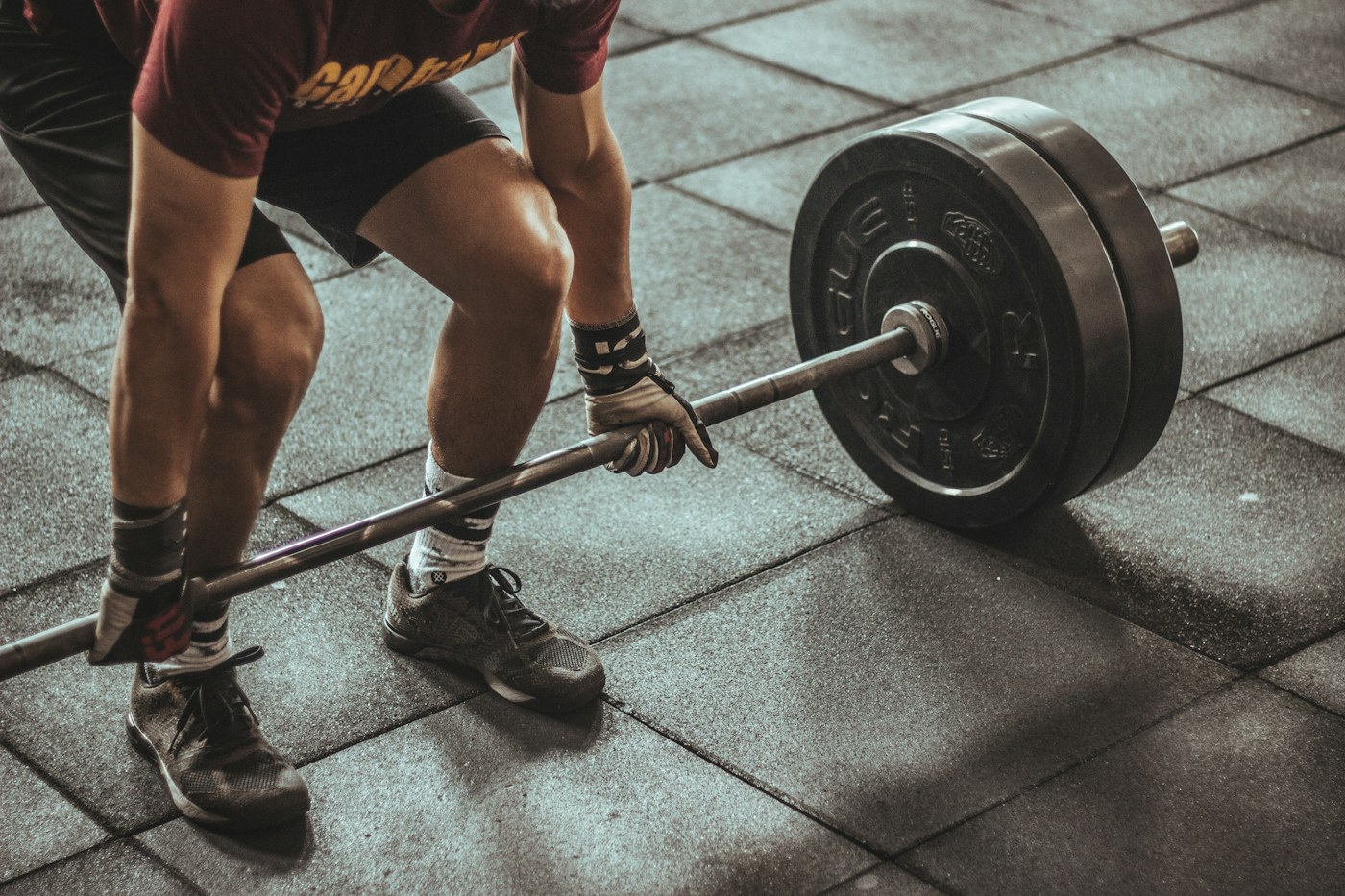
There is no magic number of repetitions that works for everyone. Heavier sets are useful for practising maximum strength, while a wider range of loads can build muscle when sets are challenging and your plan allows you to recover.
One training plan says every set should use five repetitions. Another says you need eight to twelve. A third recommends fifteen or more. These rules can sound like they conflict, but each range can have a place in a strength programme.
The first question is what you want to improve. If your goal is to lift a heavier single repetition, you need to practise lifting relatively heavy weights. If you want to build muscle, you have more flexibility. A range that lets you train hard, use good technique and add work over time is often a practical choice.
What a repetition range means
A repetition is one complete lift and lowering of a weight. A set is a group of repetitions performed before you rest. A set of six uses a heavier load than a set of fifteen for most exercises, because you cannot usually lift the same weight as many times.
The number of repetitions does not tell the whole story. The weight, how close you are to your limit, how many sets you complete and whether you use controlled technique all matter. Twelve easy repetitions with a very light weight are not the same challenge as twelve demanding repetitions with a heavier one.
Repetitions for building muscle
Research has found that muscle growth can occur with a broad range of loads. Sets with lighter weights can still be effective when they are challenging and performed with enough effort. Heavier weights can also build muscle.
For many people, about six to fifteen repetitions is a useful working range for common exercises. It gives you a manageable balance: the weight is heavy enough to make sets challenging, but you do not need to lift near your maximum on every set. You can use fewer reps for a squat or press and more for a curl or lateral raise if that feels better.
You do not have to reach the point where you cannot complete another repetition on every set. Finish most sets when you think you could do one to three more clean repetitions. If you are new to training, leave more room and focus on learning the movement. Taking a set to failure can make recovery harder, especially on demanding compound lifts.
Repetitions for strength
Strength improves in part through practising the skill of lifting heavy weights. Sets of around three to six repetitions are common for this goal. The load is heavier, so you should rest longer and pay close attention to technique.
You can build strength without testing a one-repetition maximum. Most training sessions do not need a true maximum lift. Use a load you can control for the planned repetitions, stop before your form breaks down and add weight gradually. A spotter or safety bars are important for lifts where getting stuck under the weight could cause injury.
Higher-repetition work can still support strength by building muscle and giving you practice. But if you want to improve a specific lift, include some training that resembles that lift and its heavier demands.
Repetitions for muscular endurance
Sets above fifteen repetitions can improve your ability to repeat an effort, and they are useful when your equipment is light or when you prefer a lighter load. They can also work well for smaller movements such as calf raises or some shoulder exercises.
High-repetition sets can become uncomfortable because breathing and general fatigue rise along with local muscle effort. Stop if you cannot keep a steady range of motion. You do not need to push a set until the repetitions become sloppy just because the number is high.
How to choose the range for an exercise
Use a lower range when the movement feels stable and you want to practise strength. Use a moderate range for most muscle-building work. Use a higher range when you have lighter equipment, are training a smaller muscle or prefer not to lift as heavy.
Here is a simple starting point:
- Squat, deadlift, bench press or overhead press: 5 to 10 repetitions.
- Rows, split squats and machine presses: 8 to 15 repetitions.
- Curls, calf raises and lateral raises: 10 to 20 repetitions.
These are flexible starting ranges, not rules. An exercise may feel better with a different number. If a movement becomes unstable or painful as you get tired, use a lighter load, fewer repetitions or another exercise.
How to progress without changing everything
Pick a range and keep it for several weeks. Start with a weight that lets you perform the lower end with control. Over time, add one repetition to a set when you can. When you can reach the top of the range across all sets without losing form, increase the weight a small amount and begin again near the bottom.
For example, for three sets of eight to twelve dumbbell presses, you might do 10, 9 and 8 repetitions. Stay with that weight and build gradually. Once you can perform 12 repetitions on each set with good control, try the next dumbbell size. If the jump is too large, keep using the current weight until it feels easier or choose a different progression.
Track the exercise, weight and repetitions. A simple log makes it clear when to add a rep or load. Do not increase the weight just to hit a calendar date; progress depends on your readiness and equipment.
Rest and technique still matter
Rest long enough that you can perform the next set well. Heavy compound exercises may need two or three minutes, sometimes more. Smaller movements may need less. If your repetitions fall sharply because you rushed, extend the rest period.
Use a range of motion you can control. Lower the weight smoothly and avoid bouncing or twisting to force the last rep. A hard set should feel demanding in the muscles you are training, not like a loss of balance or control.
The best range is the one you can repeat
If you are unsure where to begin, use eight to twelve repetitions for most exercises and adjust after a few sessions. Choose a weight that leaves a small amount of effort in reserve, practise steadily and record your progress.
For muscle growth, you have options across a wide range of repetitions. For maximum strength, include heavier work that matches your goal. You do not need to make every set look the same. A well-planned mix can be effective, as long as the loads, technique and recovery fit your experience.